
The Middle Ages covers a huge period of time in the western world, from AD 300 - the rise of the Roman emperor Constantine and the adoption of Christianity as the official religion of the Roman Empire - until the 14th century. This gives lots of scope.
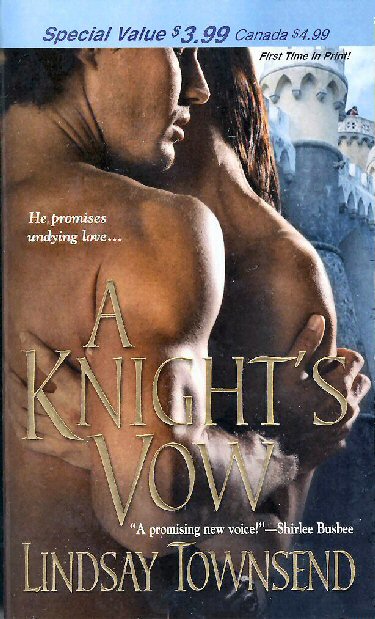
It was a time when religion played a crucial part in people’s lives. The clash of the spiritual and practical was very real. That clash is shown most clearly in the history of the Crusades, when men, women and even children left their homes to travel to the Near East to ‘win’ the holy city of Jerusalem. The motives of such people were mixed and varied, so that mix of emotions - the profound, the greedy, the opportunistic, the generous - fascinate me as a writer. I touch upon the impact that the Crusades and contact with the Arab world had on men and women in ‘A Knight’s Vow’.
 The Middle Ages was a time very different to our own, with different beliefs: a pig could be put on trial for witchcraft, a man would be made to prove his innocence by clasping a red-hot iron bar, a woman would be told by the church that she was inferior to her husband and yet still be expected to defend his castle. Alchemy and chemistry were one and the same. The contrast in ideas between then and now fascinate me and I like to show them at work in my romances. In ‘A Knight’s Enchantment’ I have a woman alchemist and she uses her skills to help the hero save his brother.
This was the age of Eleanor of Aquitaine's court of love, of Geoffroi de Charny’s ‘A Knight’s Own Book of Chivalry’ - a how-to book for knights - and Christine de Pizan’s ‘City of Ladies’ - a defense by a woman writer of her own sex. It was a time of the Viking sagas, of troubadours and the chronicles, of many rich and varied sources of information. It was a time of jousts and tournaments, where ladies gave favours and knights vied for honour - jousts I describe in my ‘A Knight’s Enchantment’ and ‘To Touch The Knight’.

The Middle Ages had many decisive battles that changed the course of history - Hastings, Agincourt, Poitiers, Crécy amongst them. I explore the changes the Battle of Hastings made in my ‘A Knight’s Captive’.
 I write romances in which the history serves the hero and heroine and the impact of that history is shown through their lives. The Middle Ages gives me a wonderful backdrop for adventure, high stakes, courtly knights and beastly ones, generous ladies and cruel damsels, peril, good and horrible manners and amazing costumes.
I love the Middle Ages.


 Posts
Posts


