 So, first, the background part. I’ve loved the theatre for, oh, for forever. All the different groups you’d imagine, from concert parties got up to, ahem, entertain the town’s old folks to school groups cheerfully murdering Shakespeare. But in my teens, real life asserted itself in the form of school principals and their so called ‘careers advisers who told me no, what you have to do is study hard and get a ‘proper’ job. Theatre didn't count as a proper job by any stretch. Listening to their talking heads instead of following my whispering heart, that’s what I did for years, resigning myself to my real love never being more than a part-time lover….a sideline to whatever ‘proper’ job I happened to be doing.
Until the ‘proper job’ fell apart. And my life changed forever. Word got out. The phone started to ring. ‘I hear you’re free right now….’ ‘As you’re not working, would you have time to….?’ Almost by accident, I was working in the theatre. A 'proper' job....?
In my theatre-as-just-a-hobby years, I’d drifted away from the on-stage lights, curious to know what really went on in that mysterious, cavernous world backstage. Never a ‘sing up, Louise’ kind of kid at heart, I’d discovered that being in the limelight interested me less than how that limelight worked. How DID the show actually go on? I’d learned how by absorbing as much as I could, graduating from working for fun and the price of a drink in small, ill-equipped halls with no more than four black walls and a couple of stands to clips lamps on, to bigger theatres with all the bells and whistles. The crews in those places had become my friends, and now they pushed opportunity after amazing opportunity my way. I grabbed every single one, until the day I found myself on the train to London, wondering how I’d had the gall to answer an ad in The Stage for a Deputy Stage Manager….and how on earth I’d been granted an interview…..
That’s how I discovered my dream job. The role of Deputy Stage Manager is a very precise one. I’ll call her ‘she’ just for simplicity, but there are as many ‘he’ DSMs as ‘she.’ Step into any rehearsal room, and you’ll spot her. She’s the one joined like a Siamese twin to the book.
The book IS the show. It consists of the script of the play set into a loose-leaf folder. If it’s a musical, it’ll have the words and the songs. If it’s an opera, the whole thing consists of a musical score called the libretto. The pages of the script are arranged to appear only on the left-hand side of the folder as you open it on the desk in front of you, and they’re interleaved with blank pages. This is how the book looks on Day One of rehearsal, at least. It doesn’t stay like that for long. From that moment on, the DSM begins to record on those blank pages every single thing that will happen before, during, and immediately after the show as it will happen in performance.
This consists of – well, let’s see. It’s a long list. The floor plan of the set, and how it changes from act to act or scene to scene is kept in the book. As for the bodies on the stage, every one of their exits and entrances goes in there. Every single move the cast makes onstage – the ‘blocking’ – has to be meticulously recorded. Same goes for props and furniture – where they’re placed and when, who uses them, and how. Later, the places where the lighting changes or sounds effects will happen have to be noted. Scene changes involving hefty bits of scenery ‘flown’ above the stage or large pieces moved in on wheels or ‘trucks’ can be dangerous movements on stage and therefore have to happen in a consistent, particular order so that everyone involved knows precisely what’s happening at any given moment. That’s in the book, too.
Why? Don’t the cast just learn all this themselves? Well, sure they do, but during rehearsal they sometimes forget. Sometimes even the director forgets! A central record has to be kept. And what if, at some point during the run of the show, someone literally ‘breaks a leg,’ and the understudy is called to the fore? The moves for the part they’re taking over are in the book, and that’s vital. It also provides technical and production information if the show should be performed again at a later date in the future, in revival, if it goes out on tour, or if there’s a cast change, and so on.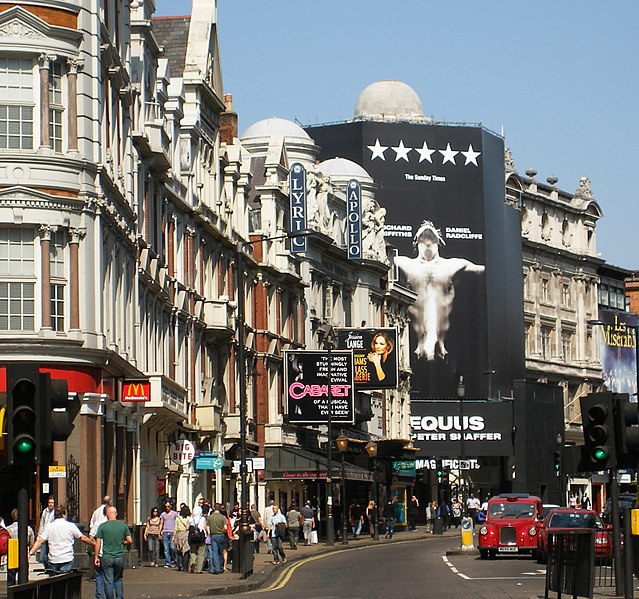 The first stages of rehearsals rarely take place in the theatre – most theatres have little or no space for this – so you’ll probably find yourself in some draughty premises in a part of the town only reached by one bus a day, or on the furthest reaches of the tube train system. If you’re lucky, you might get a room in a purpose-built studio with clean loos and an in-house café – if you’re lucky! The DSM is also responsible for the boring bits in the rehearsal room, getting there in the morning before anyone else arrives to set up the space and makes sure everything’s ready to begin bang on time. In theory, she has a one-hour lunch break, but in practice that’s mostly taken up with drawing up props lists or notes for the stage manager or assistants, making phone calls to the set designer or the wardrobe department, passing on queries or notes from rehearsal. Depending on the production, the days can be long – three sessions a day, morning, afternoon and evening, isn’t unusual, and the DSM is in on each session. At the end of each session she makes sure the company know tomorrow’s ‘calls,’ the times they’re next needed for rehearsal, then she’ll tidy up the room and sweep it ready for the morning. Hopefully someone else from the cast will have saved her a seat in the nearest pub and already ordered her a nice, cool drink….as she takes her first sip, the director will plop down in the seat beside her with ‘just a few more notes to pass on….’
Then comes the day when the entire company and its chattels decamps to the theatre itself for production week. You’re in the venue! Suddenly, ‘real’ theatre begins. A production desk is set up in the auditorium, manned by the director, the DSM, and any of the designers getting their first proper look at the production onstage. Here is where the plotting takes place – no, that’s not some kind of wicked conspiracy, but one of the most exciting parts of the process, when the stage lighting design is worked on by the designer and director. The electrics department, known as the LX team, ‘plot’ the lighting plan by running various groups of the stage lights based on the lighting design. Gradually each lighting cue is signed off to the director’s satisfaction, and the points at which the lighting cues will happen are noted in the book. Same for sound cues and any other effects called for by the production. Into technical rehearsal, and the DSM moves to what will now be her permanent, backstage home for the run of the show – the prompt corner. It’s usually situated somewhere in the left of the backstage area, but if it’s on the right it’s called a ‘bastard’ prompt! The book now lives permanently on the prompt desk - see photo, left - and will never leave the theatre. Here the DSM will ‘call’ the show. The prompt desk allows her to communicate with all parts of the theatre – all the backstage areas including the dressing rooms, wardrobe department and the green room, which is the cast’s rest and preparation area just off-stage, all the technical members of staff including stage crew, all stage management, and the electrics and sound operators. She can also talk to ‘the flies,’ which isn’t a sign of a creeping stress-induced madness characterised by an overwhelming desire to talk to invisible insects, but refers instead to the crew in the ‘fly tower,’ the vast area above the stage where scenery is lowered down or lifted up to be stored till it’s needed again – in other words, it’s ‘flown’ in or out by the fly crew or flymen. All of these operations are signalled by the DSM either vocally through a headset talk-back system - the 'cans' - or by means of a series of coloured cue lights used to signify when the operators must 'stand-by' for their cues and then 'go.' Split-second timing is a skill all DSMs are born with! The prompt desk also has the facility for the DSM to communicate with ‘front of house,’ the audience areas, either by ringing the three-, two- and one-minute bells before the show begins, or to make spoken announcements inviting the audience to take their seats.
Technical rehearsal of course always goes smoothly with no hitches – well, maybe not! But everyone backstage, including the cast, knows that the technical rehearsal is vital. It’s not about acting your heart out or singing your soul out, but is the time when each move and each cue is rehearsed over and over till it’s perfect. Not until all the technical and safety aspects of the show are running without a hitch and to the satisfaction of the DSM and the stage manager can the show go ahead. See now why all this meticulous recording and note taking earlier on was so essential…..?
Dress rehearsal now, and yes, that should go without a hitch! Unless a safety issue is involved, the dress rehearsal will run ‘as per show,’ just as it should run in every performance, with no stoppages. If the technical rehearsal worked, the dress rehearsal should be fine.
And then – first night! The sense of relief after a good first night is palpable. A party is called for! But not too boozy and not too late into the wee small hours. After all, tomorrow is another day….and another show. That was and is my dream job, and I loved every minute of it, . I’ve worked in some wonderful venues – everything from some of the UK’s most beautiful Edwardian theatres designed by the famous Frank Matcham, to brand-new state-of-the-art venues. I’ve done open-air theatre in the grounds of stately homes or ancient castles and even, for one fabulous summer, a restored Tuscan monastery. I’ve been so lucky to work with some amazing directors and designers, and made lifetime friends – I even met my husband in the theatre, and only gave up the job when I was well into my first pregnancy!
Great memories. Yeah, the show always goes on, and it was fabulous to be a part of that.
Jane Richardson writes 'sophisticated, realistic and uplifting romances with a lyrical voice.' Visit her website here.
London's West End/Gielgud Theatre photo by Steve Parker
Prompt desk photo by KeepOnTruckin
Playhouse Theatre London photo by Peripatetic
Thursday, January 14, 2010
The Show Must Go On....A Stage Management Career.
Tuesday, September 22, 2009
A Man With No Name.

Some discussion on a group loop recently about whether to have both points of view in a story – the hero’s and the heroine’s. Most people seemed to prefer both, with a few who didn’t mind either way. I’m in the latter camp.
Sure, it’s nice to have both points of view. Hey, if a character has something interesting and important to say, bring ‘em on! It’s cool that a writer has the luxury of getting into more than one head and presenting both viewpoints.
It’s not always necessary, though. I’m equally happy with a story that presents just one person’s experience, and I’m fine with that being either the hero or the heroine. It’s the character that interests me more than the convention, really. We view the world around us from just one point of view, always – our own, of course – so a story with one point of view is fine.
The first (and horrendously long) draft of my short story Perfect Strangers spoke in the voices of both the hero and the heroine. It also had more head-hopping than a flea-infested dog pound, but it was a first draft, so I’ll forgive myself for that one. When it came to re-writing it and cutting it right down, it became clear pretty soon that it was the heroine, Anna, who wanted to speak. It was Anna’s head I wanted to be in, her experience I wanted to show, because I think Perfect Strangers is very much a woman’s story, one that many of us would read and say ‘yes, I know what she feels, I’ve felt this way too.’
'Reeling from the stress of a messy divorce and an unhappy Christmas, Anna seizes the opportunity to get away from London and spend a few days in Venice. When a waiter mistakenly assumes a quiet American with tousled hair and eyes darker than hot, sweet espresso is her partner, it seems only right they should spend the day together. Two perfect strangers in a perfect city, Venice works her magic on them both before they have to head back in sadness to their separate lives. It's another year, another Christmas, before they meet again; when they do, they realise that love, like Venice, is 'per sempre...' for ever.'
Of course, you don’t have to have experienced the exact same situation as Anna. It’s the emotional experience, that kind of shared understanding I like when I read the heroine’s point of view.
So what about the hero, this ‘quiet American?’ How do we learn about him? Because in Perfect Strangers, he doesn’t have a point of view.
He also doesn’t have a name.
“And work is?”
“When I’m here, it’s at l’Accademia. The gallery. I’m an art historian.” She pointed ahead of them further up the canal. “Along there. My friend Marco runs one of the departments.”
“Are you working now?”
“No, no, not this time.” Anna kept her gaze focused somewhere in the middle distance. “This is an escape.”
“A lady escaping and I don’t even know her name.”
When Anna looked at him, his smile was soothing winter sunshine. It could be so easy; just for once, to let go of the sadness she’d carried around for so long till it’d become part of her. So easy...but if she let go now, who knew where she would stop? To have a name would somehow make this more real, and Anna had had enough of cold reality.
“Look...I know it sounds strange, but would you mind if we didn’t? I think it might be simpler. Sometimes things are easier with strangers.”
To her relief, he nodded slowly.
“I think so,” he said. “Just one more detail on top of all the others?”
“Yes. Today isn’t about details. Today is...today is different.”
Choosing not to give the hero’s name in Perfect Strangers came quite naturally, as it fitted the idea that this is very much a woman’s story. As well as recognizing the way Anna feels, I wanted the reader to imagine that just maybe this could have been her, with this man, in Venice in the rain. Maybe it could still be her...one day. Who knows? After all, the man in this story is a bit of a fantasy character. He’s not only Anna’s stranger, he’s the reader’s, too. He’s whoever she wants him to be…for one perfect day.
It seems to have worked. One reviewer 'loved getting to know Anna, and how her male companion seemed to be the perfect fit for her as she was for him.' Another said the story 'captured the intensity of the love between this couple so concisely, so perfectly, that you can see why one tiny piece of information could create a ripple that would spoil the perfection.'
One more thing. An editor – not the lovely editor I eventually gave the story to - commented ‘yes, but shouldn’t they exchange names at the end?’ For the life of me, I couldn’t see how or where that would happen. Of course they will know each others’ names, but not on the page. Sometimes it’s better not to say anything. Having him announce his name would have killed the story stone dead, I think. You’d have heard the ‘clanggg’ for miles around. I’m glad I stuck to my guns and left him nameless.
And, of course, in the fine tradition of 'happily ever after,' left him with Anna per sempre...forever. The video for Perfect Strangers can be seen right now in the list for September at You Gotta Read Videos. If you like it, please vote for it!
Perfect Strangers is available HERE at The Wild Rose press, where you can also read the reviews.
Thursday, August 20, 2009
Room to Breathe, Room to Grow.

'Tony stood on the crest of the hill and looked out over the misty morning scene in the valley below. A wide curve of stripped and pruned olive trees embraced orderly rows of skeletal vines, dipping down into the valley and disappearing into the crook of the hill before reappearing on the next, and the next again.
He knew they crossed ancient boundaries, one farm’s land merging into that of another, an endless swathe fading into the distance as if they crossed the whole of Umbria. It amazed him, how there could be so much open land, so much space, quietly waiting for the first touch of spring.
He breathed deep and his lungs expanded and craved more. After years of shallow city breathing, he drank in the clean air as if making up for lost time....'
That’s Tony, the hero of A Different Kind of Honesty, in one of my favourite ‘rooms.’ You’ll be able to guess from the cover of the book where that might be. Umbria, right in the centre of Italy, is a place I go back to time and time again. For some reason, the second I get off the plane and my feet touch the ground, I feel as if I’m home. Why this should be, I can’t explain - but I know I’m not alone. I’ve met many people of different nationalities and cultures, Europeans, Americans, Japanese, who feel just the same way. Italy has a way of capturing your heart and your soul, and making you truly feel as if you’ve come home. No, it’s not where I come from, and it may never be the place I live, but like the saying goes, ‘home is where the heart is,’ and I know where my heart loves to be.
 This is my favourite room. I love this photograph of the statue of St Francis of Assisi, looking out over Umbria as if he’s seated in his favorite room and loving the view from his window. He was a guy who knew a bit about quieting the spirit and contemplation of what’s really important in a person’s life, and no, you don’t have to be religious to appreciate that feeling. When I look at this landscape, my first reaction is to take a deep breath, and it’s as if all the stresses and strains of everyday life evaporate. I can almost physically feel my heart rate slow down, and my spirit is calm.
 Here is where I find room to breathe and room to grow. I drink in the sweet clean air, and I feel alive and rejuvenated. It’s no wonder I send my characters there. Yes, it’s my own longing I’m writing about when Tony stands on that same hillside, but I make no apology. This is my favourite room, and I'm so happy to be able to share it with you.
Friday, July 10, 2009
The Honesty of a First Kiss....

Oh, my...that first kiss! A first kiss can make you swoon, fill your tummy full of zingy tingles, take your breath away. It’s fireworks and fiesta, marching bands and ticker-tape, all the bells and whistles...or maybe it’s as gentle as lingering summer sunshine and the soft touch of a whispering breeze. What is more wonderful than that first kiss? I’m telling ya, people – nothing!
The kiss that follows in this excerpt from A Different Kind of Honesty is a little different. It’s not the first kiss this couple have ever had - not as themselves, anyway. They kissed six months before this (and did a little more than just kissing...) but that was a one-time only event. Way back then, neither of then truly knew who the other person really was. Maggie Lawless only knew her one-night lover by his undercover alias, Joey Pescolloni. Undercover FBI Agent Tony Valentino – aka Joey – struggled with the fact that he had to keep his real identity a secret, for Maggie’s protection as well as his. It meant their one-night relationship couldn’t go any further, no matter how much they both wanted it differently. That 'first kiss' lingered in both their dreams from that day on.
Now, the truth is out. All bets are off. The theme of the book is, of course, honesty. And here, knowing for the first time the real truth about each other, Maggie and Tony can at last have that truly honest ‘first kiss,’ the one that will change their lives in ways they could never have predicted all those months ago. I hope you like it.
'Maggie leaned past him and pressed the start button and a solo, sultry horn smoked its way into the room. Tony recognized the song from some TV ad or movie soundtrack or something. He thought it was Dinah Washington.
Maggie lifted her glass and took a tiny sip. “Talking about things changing,” she said, moving across the room, “everything must have changed for you. The job, I mean.” She perched against the back of the sofa. “Ramon told me they pulled you out fast.”
Tony lifted his hands and his shoulders in a ‘that’s-the-way-it-goes’ gesture.
“Could’ve happened any time. Well, goodbye to it. It won’t happen again.”
He stretched over and chinked his bottle against her glass. Too much space between them again, but it didn’t seem to matter any more; he had all the time in the world to get closer to her.
“Do you miss it?” she asked.
He puffed a breath out between his lips and settled against the counter. “No.”
He ran his finger around the lip of the bottle. The bubbles in the beer made a fussy, hissing sound. “It’s done. They won’t be putting me undercover anywhere for a while, even if I wanted to go. Not in New York anyway. And the legal eagles have been working it for some time now, even before I came out. The whole court process starts off in a couple months. Or so they tell me.”
Maggie nodded. “I don’t know how you did it. I mean, the name and everything, for all that time. Being someone else.” She glanced away and a look he couldn’t identify crossed her face. Confusion, perhaps? Anxiety. The space between her eyes corrugated in concern. “Were you someone else?”
Tony thought hard, shook his head. “I don’t think so...not entirely.” He rubbed a finger across his brow. “It was like being both, me and Joey, all at the same time. Him on the outside, me on the inside.” He looked out across the room to the lights of New York, wondering. He’d never thought of it before, the way she’d asked, at least not coherently.
“And you know something?” he said, still staring out of the window. “That was fine. Until one day something happened and I started to hate that name. Joey Pescolloni.”
Her voice was no more than a whisper. “What happened?”
“I met you,” he said simply. “I met you and I wanted to tell you everything. What I was doing, who I was. All of it.”
She lowered her head and made a little stifled sound, a release of something. “But you couldn’t.”
“No.”
He closed his eyes, remembering that chilly, fall morning. The cream and gold corridor outside her room, her kiss still hot against his mouth as he started to walk away from her door. Something stopping him; a fine, invisible chain unraveling behind him and snapping him back, strained and taut. He’d slumped against the wall, head tipped, his eyes running over the stupid, over-elaborate plaster cornice that roped along the edge of the ceiling like icing on a wedding cake. His fists bunched against his sides, pressing down as if he could push himself down through the floor, down into the earth till he had nowhere else to go but up, screaming the truth. The physical effort he’d made to stop himself from banging on her door and grabbing her to him, telling her everything, just to hear her say his real name over and over as he made love to her. When he pushed himself off the wall, the heel of his shoe had left a dirty half-moon on the flock paper.
He opened his eyes. He was still here in her room and she was there, quiet and unmoving. Just waiting for him, giving him his time, his space.
“No one knew everything,” he said. “Not my supervisor or the men I was with. Not my wife, my family. Only I knew it all and it filled me up, but it was okay. I was sorta big enough to hold it all, you know?” He lifted his beer to his lips, but changed his mind and put it down.
“And then...you. You happened and that was somehow too big for me. I needed you to know it all too. I wanted you to have the truth.”
Behind him, Dinah began to sing again. Embraceable You. Maggie moved towards him and set her glass on the counter beside his beer. She touched her fingertips to his face.
“I can have it now.”
Taking the half step that brought him close enough to lean his forehead on hers, he laid his hand over her fingers on his cheek; his mouth so close to hers he felt her light, hesitant breath against his lips.
“Maggie,” he said quietly and he felt her breathe in. “Six months...six months of dreaming about you, thinking I’d never see you again.” He slid his hand behind her head, the scent of her hair the same one from before of roses, of something rich and heavy he didn’t know the name of and he buried his face in it, filling himself with her.
“I thought it’d kill me...but now, it’s like I died and came to life again.”
“I didn’t even know your real name.” Her fingers rested lightly against his chest as her voice wrapped itself around his insides. “All that time, thinking of you as Joey.”
He touched a finger lightly against her lips, hoping against hope. “That’s a figure of speech, right? All that time, thinking of me?”
She looked up, and her eyes were full of something he recognized deep inside, something familiar he tried to name, but the word escaped him.
“No,” she whispered. “Not a figure of speech.”
As he kissed her, the word came back. It was something that had eluded him all his life except for one short, perfect night, and never again since...the one thing he needed above anything else, and he knew now just as he’d known then that she was his only source; she was the beginning and the end.
It was honesty.'
A Different Kind of Honesty is available in print and digital editions from the Amazons, Fictionwise, etc, or direct from The Wild Rose Press.

 Posts
Posts


